Key takeaways
- Compare the best sprayers for pottery, from mouth-blown glaze atomizers to a compressor siphon gun and a clear aerosol finish for non-fired work.
Getting glaze onto a pot evenly is a decision about control, not coverage. A brush leaves strokes, dipping wastes glaze and risks uneven thickness, and pouring is hard to aim on a curved surface. A sprayer lets you build thin, even layers exactly where you want them, and the right one depends on whether you work with kiln-fired glazes or pieces that never see a kiln.


This guide covers four options for different studio setups: two mouth-blown stainless atomizers for small-batch glaze work, a compressor-driven siphon gun for larger pieces and faster coverage, and an aerosol clear glaze for non-fired clay. Each product below was selected from its Amazon listing name and specifications, with the trade-offs of each approach spelled out so you can match the tool to the way you actually glaze.
Quick Picks
As an Amazon Associate we earn from qualifying purchases
| Product | Best for | Key spec from title |
|---|---|---|
| Critter Spray Products 22032 118SG Siphon Gun | Large pots and fast, even glaze coats | Air-powered siphon gun with 16 fl oz Mason jar |
| BQLZR Pottery Painting Sprayer | Small detail work and test tiles | Stainless steel atomizer, 100 mL |
| RDEXP 200 mL Stainless Steel Paint Glaze Spray Pot | Bigger glaze batches without refilling | Stainless steel atomizer, 200 mL |
| Krylon I00500A07 Triple Thick Clear Glaze Aerosol Spray | A glossy finish on non-fired pieces | 12-ounce aerosol, triple thick clear glaze |
How to Choose
Match the Sprayer to Your Glaze
Kiln-fired glazes and non-fired finishes need different tools, and mixing them up wastes both time and material. Mouth-blown atomizers and compressor siphon guns apply real liquid glaze that goes into the kiln, so they suit stoneware, earthenware, and porcelain work. An aerosol clear glaze, by contrast, dries into a protective coating on its own and never enters a kiln, which makes it right for polymer clay, bisque, plaster, and decorative pieces. Before you buy, decide which kind of piece you are finishing most often, then pick the tool built for that job rather than hoping one sprayer covers everything.
Think About Batch Size and Refills
A small atomizer holds enough glaze for a mug, a test tile, or a few detail passes, but refilling it mid-piece breaks your rhythm and can leave a visible seam where the coat changed. If you glaze bowls, vases, or sets of matching pieces, a larger reservoir saves repeated trips back to the glaze bucket. The 200 mL atomizer in this guide holds twice the glaze of the 100 mL model, while the siphon gun draws from a full Mason jar, which suits the largest work. Match the container to the size of the pieces you actually make.
Check What Else the Tool Needs
Some sprayers work on their own and some need equipment you may not already own. A mouth-blown atomizer needs nothing but your breath and a jar of glaze, so it is ready the moment it arrives. A compressor siphon gun needs an air compressor that delivers enough air volume, and the listing for the Critter gun calls for a compressor rated at 2 to 3 CFM with a three-quarter horsepower tankless minimum. An aerosol can needs nothing extra at all. Add up the hidden requirements before you commit, since a sprayer that needs a compressor you do not own is not a bargain.
Plan for Clogging and Cleanup
Glaze is a suspension of fine particles in liquid, and those particles settle, clump, and block narrow passages. A sprayer that clogs halfway through a coat leaves splatter and bare patches, so sieve your glaze before it goes into the sprayer and stir it often while you work. Mouth-blown atomizers have simple passages that rinse clean under a tap, while a siphon gun has more parts to flush and dry. Whichever tool you choose, budget time to clean it the same day you use it, because dried glaze is far harder to remove than wet glaze.
The 4 Best Options
Critter Spray Products 22032 118SG Siphon Gun
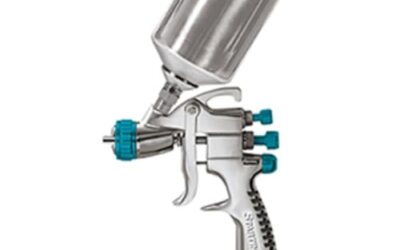
The Critter siphon gun is the workhorse pick for potters who glaze larger pieces and want steady coverage without blowing by mouth. It draws glaze from a standard Mason jar and lays down a circular pattern adjustable from half an inch to two and a half inches, so one tool handles broad coats and tighter detail passes. Because it runs on compressed air, the spray stays consistent throughout the session, which matters when layering thin coats on a vase or platter. You need a compressor that meets the listing requirements, and you should sieve your glaze well, since the siphon tube pulls up whatever is in the jar.
Specs
- Air-powered siphon gun
- 16 fl oz Mason jar
- Zinc-plated steel and glass construction
- Maximum 90 PSI
- Requires a 2 to 3 CFM compressor, 3/4 hp tankless minimum
- Sprays a 1/2- to 2-1/2-inch circular pattern
- Includes spray gun, Mason jar, and gasket
- 90-day warranty against manufacturing defects
Best for: Potters glazing larger pieces who already own a suitable compressor.
Watch out for: Check that your compressor meets the air volume requirement before buying, and sieve glaze carefully to keep the siphon tube clear.
BQLZR Pottery Painting Sprayer
The BQLZR atomizer is a simple mouth-blown tool that suits detail work, test tiles, and small pieces where precision matters more than speed. Fill the stainless steel pot with glaze, fit the tight lid, and blow through the tube to mist glaze onto the surface in controlled bursts. With no moving parts and no compressor involved, there is very little to go wrong, and cleanup is a quick rinse. The 100 mL capacity keeps the tool light in the hand, which helps during long sessions close to a piece. It will not coat a large vase in one pass, but for accents, layering, and small-batch glazing it earns its place.
Specs
- Stainless steel construction
- 100 mL capacity
- Tight lid
- Mouth-blown atomizer for glazes and pots
Best for: Detail glazing, test tiles, and small pieces where a light, simple tool matters.
Watch out for: Wear a respirator and work with good ventilation, since mouth-blown spraying puts fine glaze mist close to your face.
RDEXP 200 mL Stainless Steel Paint Glaze Spray Pot
The RDEXP atomizer works the same mouth-blown way as the smaller BQLZR, but its 200 mL pot holds twice as much glaze, the better pick for coating a medium-sized piece without stopping to refill. The stainless steel body resists corrosion from glaze chemicals and cleans up easily, and the larger reservoir means fewer interruptions during a layered coat. Like any mouth-blown tool, it rewards a steady breath and a well-sieved glaze, and it gives you direct control over how heavy each pass lands. If you like an atomizer but keep running dry halfway through a bowl or planter, this is the size to step up to.
Specs
- Stainless steel construction
- 200 mL capacity
- Model RDN120532016
Best for: Medium-sized pieces and layered coats where a larger glaze reservoir avoids refills.
Watch out for: Sieve your glaze before filling, since particles that pass through a brush can still block a fine atomizer tube.
Krylon I00500A07 Triple Thick Clear Glaze Aerosol Spray
The Krylon aerosol is a different kind of product from the other three picks. It is a clear enamel spray that dries into a permanent, extra-high-gloss protective finish on polymer clay, bisque, plaster, and similar surfaces, with one coat doing the work of three coats of most clear coatings. It cures fully in 15 minutes and covers 56 square feet per can, so a single can goes a long way on decorative pieces. What it does not do is apply kiln-fired glaze, so do not use it on ware headed for the kiln. For finished pieces that need shine and protection without firing, it is fast and simple to use.
Specs
- 12 fl oz aerosol
- Enamel formula
- Non-firing glaze for polymer clay, bisque, plaster, and more
- Permanent protective extra-high-gloss finish
- One coat equals three coats of most clear coatings
- 15-minute full cure
- 56 sq ft coverage
- Sold by Amazon.com
Best for: Adding a glossy protective finish to polymer clay, bisque, and plaster pieces that will not be fired.
Watch out for: This is a non-firing finish only, so never use it as a substitute for kiln glaze on functional ware.
Which One Fits Your Situation
You Glaze Large Pieces in a Studio With a Compressor
Choose the Critter siphon gun. Its Mason jar reservoir and adjustable circular pattern cover big surfaces quickly, and the steady air supply keeps each layer even. Just confirm your compressor delivers the air volume the listing calls for, and keep a sieve handy so the siphon tube stays clear through a full glazing session.
You Work Small and Want the Simplest Tool Possible
Choose the BQLZR 100 mL atomizer. It needs no power, no compressor, and no setup beyond filling the pot, which makes it ideal for test tiles, mugs, and detail passes. The light stainless body is easy to hold close to a piece, and cleanup takes minutes rather than a full teardown.
You Like Atomizers but Keep Running Out Mid-Piece
Choose the RDEXP 200 mL spray pot. It gives you the same direct, mouth-blown control as a small atomizer with twice the glaze on board, so medium bowls and planters get a full coat without a refill break in the middle. The stainless body handles repeated use and rinses clean between sessions.
You Finish Pieces That Never Go in a Kiln
Choose the Krylon Triple Thick Clear Glaze aerosol. It lays down a hard, glossy protective coat on polymer clay, bisque, and plaster in a single pass and cures in 15 minutes. Remember that it is a finish, not a glaze, so keep it away from any ware you plan to fire.
Common Mistakes
- Spraying unsieved glaze, which lets clumps reach the atomizer or siphon tube and causes splatter and bare patches.
- Using an aerosol clear glaze on ware headed for the kiln, where it does not belong and will not survive firing.
- Skipping a respirator and ventilation, since fine glaze mist contains silica and other particles you should not breathe.
- Buying a compressor siphon gun without checking that your compressor meets the air volume requirement.
- Letting glaze dry inside the sprayer, which turns a quick rinse into a long soak and can block narrow passages for good.
Frequently Asked Questions
Can I use a mouth-blown atomizer with any glaze?
Most liquid glazes work in an atomizer once they are sieved and thinned to a sprayable consistency, but thick or heavily textured glazes will clog the tube. Always sieve glaze through a fine mesh before filling the pot, stir it often while you work, and test on a tile first so you can adjust the thickness before spraying a finished piece.
Do I need a respirator when spraying glaze?
Yes. Spraying turns glaze into fine airborne particles, and even glazes without obvious hazards contain silica dust. Wear a properly fitted respirator rated for particulates, work in a ventilated space or under an exhaust hood, and keep the spray pointed away from your face when using a mouth-blown atomizer.
What is the difference between the Krylon spray and a real glaze?
A real glaze is a glass-forming coating that melts and bonds to clay during kiln firing, while the Krylon aerosol is an enamel finish that dries into a hard, glossy layer at room temperature. The aerosol suits polymer clay, bisque, and plaster that will never be fired, but it cannot replace a kiln glaze on functional stoneware or porcelain.
How do I keep my pottery sprayer from clogging?
Sieve every batch of glaze before it goes into the sprayer, stir the glaze regularly so particles stay suspended, and clean the tool the same day you use it. Rinse atomizers under running water and flush a siphon gun with clean water until the spray runs clear, then let all parts dry fully before storing.