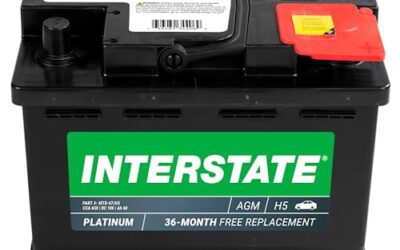
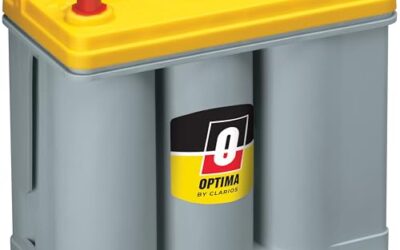
Our Short List of 3


All 3 Picks at a Glance
| Product | Specs | Action |
|---|---|---|
| 1. Renogy 12 Volt 100Ah Deep Cycle AGM Battery — Best AGM Overall | Check price on Amazon | |
| 2. WEIZE 12V 100Ah Deep Cycle Battery, Group Size 31 — Best Value AGM | Check price on Amazon | |
 3. LiTime 12V 100Ah LiFePO4 Battery, Group 31 — Best Lithium Upgrade | Check price on Amazon |
Key takeaways
- Compare the best deep cycle battery for camper use, from sealed AGM house batteries to a lighter LiFePO4 option, with sizing, charging and fit guidance.
As an Amazon Associate we earn from qualifying purchases.
A camper house battery has a different job from the battery that starts your engine. It runs the lights after dark, keeps a compressor fridge cold overnight, powers the water pump, charges phones and laptops, and sometimes feeds a small inverter for a CPAP machine or a coffee maker. That is deep cycle work: steady draws, repeated discharge and recharge, day after day on a trip. Pick the wrong type and the symptoms are familiar — lights dimming by the second evening, a fridge that warms up before morning, or a battery that needs replacing far sooner than expected.
This guide compares three deep cycle batteries that suit camper and RV house-bank use: two sealed AGM models that work with most factory converters, and one lithium iron phosphate model for campers who want more usable capacity and far less weight. Every specification below comes from the manufacturer or product listing for that exact model. We have not bench-tested these batteries ourselves, so treat the figures as published specs to verify against your own rig, not as practical test results.
Affiliate Disclosure: This article contains affiliate links. If you buy through a link on this page, we may earn a commission at no extra cost to you.
Quick Picks
- Best AGM overall: Renogy 12 Volt 100Ah Deep Cycle AGM Battery — a proven sealed house battery with low self-discharge and a published 1100A maximum discharge figure.
- Best value AGM: WEIZE 12V 100Ah Deep Cycle Battery, Group Size 31 — the same nominal capacity in a standard Group 31 case, with a 1150A maximum discharge figure from its listing.
- Best lithium upgrade: LiTime 12V 100Ah LiFePO4 Battery, Group 31 — much lighter, with a built-in battery management system and far more usable capacity per charge, provided your charger supports a lithium profile.
How Much Battery Does a Camper Actually Need?
Start with a simple daily energy budget instead of guessing a battery size. List what you run, roughly how many watts each item draws, and how many hours it runs. A small compressor fridge might draw around 40 to 60 watts while its compressor is cycling. LED lighting for an evening might total 20 to 30 watts for a few hours. A water pump runs in short bursts. Phone and laptop charging adds a modest amount. Add the watt-hours together and you get a realistic daily total.
A 12 volt, 100 amp-hour battery stores about 1,280 watt-hours on paper if it is lithium, and the same nominal figure for AGM — but the usable portion differs sharply. AGM lead-acid batteries last longest when you avoid discharging them below about half of their rated capacity, a point Renogy itself makes in its product guidance, recommending against discharging below that level to protect cycle life. So a 100Ah AGM gives you roughly 50 usable amp-hours in normal service. A LiFePO4 battery, by contrast, is designed to use most of its rated capacity, and LiTime publishes cycle figures at full depth of discharge for its 100Ah model. That single difference explains why many campers who switch from AGM to lithium feel as if they doubled their battery, even at the same amp-hour rating.
If your daily budget is modest — lights, phones, a pump and a fridge on a weekend trip — a single 100Ah AGM can be enough, especially with a solar panel topping it up during the day. If you run an inverter for longer periods, camp for several days without hookups, or travel in winter when heating fans run all night, plan for two batteries in parallel or a larger lithium bank. Both AGM picks below support parallel connections up to four units according to their listings, and both support series connections, which matters if you ever rebuild the bank at a higher voltage for a different application.
1. Renogy 12 Volt 100Ah Deep Cycle AGM Battery — Best AGM Overall
The Renogy 100Ah AGM is the safe, conventional choice for a camper house bank, and it earns the top AGM spot here because its published specifications are unusually complete. It is a 12 volt, 100 amp-hour sealed lead-acid battery using absorbent glass mat construction, so there is no watering, no venting routine in normal use, and no acid to spill if the battery is secured properly in its compartment.
Renogy lists a maximum discharge current of 1100A for five seconds, a self-discharge rate below 3 percent per month at 77 degrees Fahrenheit, and a maximum continuous charging current of 30A. The listed dimensions are 13.1 by 6.9 by 8.6 inches and the listed weight is 63.9 pounds. It ships with M8 terminal bolts according to the product questions and answers. Renogy states the battery supports series connections without a stated limit and parallel connections up to four units, and its guidance says batteries combined in a bank should match in capacity, voltage, type and ideally brand.
For camper use, the practical strengths are compatibility and predictability. Almost every factory converter-charger in a travel trailer or motorhome has a lead-acid or AGM charging profile, so this battery is usually a drop-in replacement for a tired flooded or AGM house battery. Cycle charging voltage is listed in the 14.4 to 14.8 volt range in maker materials, with float in the 13.5 to 13.8 volt range, which sits comfortably inside what typical RV converters deliver. The wide discharge temperature range in the listing, from minus 4 to 140 degrees Fahrenheit, also suits campers who store the rig in cold weather, although charging in freezing conditions should still follow the maker guidance.
The trade-offs are the familiar AGM ones. At nearly 64 pounds, one battery is a two-hand lift, and a pair is a serious job. You should plan around using about half the rated capacity if you want the battery to last, which means the effective energy per pound is low compared with lithium. And like any lead-acid battery, leaving it stored partly discharged shortens its life, so a maintainer or a periodic top-up charge during storage matters.
Choose the Renogy if your camper has a standard converter, you want a sealed battery that asks for almost no attention, and your trips are weekends or short stretches with some daytime charging from solar, the tow vehicle, or a generator.
2. WEIZE 12V 100Ah Deep Cycle Battery, Group Size 31 — Best Value AGM
The WEIZE 100Ah is the other sensible AGM route: a Group 31 sealed deep cycle battery aimed squarely at RV, solar, camping, cabin, marine and off-grid use, according to its listing title. Group 31 is a common camper and trailer battery box size, so for many rigs this is the battery that physically fits the tray and box you already own — always measure your compartment and compare it with the listed dimensions of 12.99 by 6.73 by 8.34 inches before ordering.
The listing, under model number QS12-100-T, gives a maximum discharge current of 1150A and a self-discharge rate of 3 percent, matching the headline figures of the Renogy while adding a little on the discharge number. Listed weight figures in the product information sit around 60 to 63 pounds depending on the field, so plan on the same two-hand lift as any 100Ah AGM. The product description notes a heavy-duty calcium-alloy grid intended for both float and cyclic service, and the connection guidance mirrors the Renogy: up to four in parallel, series without a stated limit, and matching batteries within a bank.
In a camper, the WEIZE makes the most sense as a straightforward replacement or as a matched pair for a simple two-battery bank. Because it is a conventional AGM, it pairs with standard converter-chargers and typical solar charge controllers set to a sealed or AGM profile. There is no app, no Bluetooth and nothing to configure, which many camper owners honestly prefer: connect it, charge it fully, and keep it from sitting discharged.
The watch-outs are the same chemistry limits as the Renogy, plus one buying detail. WEIZE sells more than one 100Ah AGM listing, and older references to this battery circulate under a different code, so confirm the model number QS12-100-T and the Group 31 size on the listing before you buy, and do not mix this battery in a bank with a different model or age. As with any AGM, respect the roughly half-depth discharge habit for long life, recharge promptly after a trip, and top it up every couple of months in storage — the product description itself recommends a top charge at least every two to three months rather than leaving the battery to sit.
Choose the WEIZE if your battery box is Group 31, you want a sealed AGM from a listing that states its key figures plainly, and you would rather put the savings toward a second matched battery or a solar panel.
3. LiTime 12V 100Ah LiFePO4 Battery, Group 31 — Best Lithium Upgrade
The LiTime 100Ah lithium battery is the pick for campers who are tired of the AGM compromises. It is a 12.8 volt, 100 amp-hour lithium iron phosphate battery in a Group 31 footprint, with a built-in 100A battery management system and low-temperature protection according to its listing. LiTime publishes more than 4,000 deep cycles for this model in its listing title, and maker materials describe cycle life figures that extend far beyond that at shallower depths of discharge — either way, the rated cycle life is a multiple of what an AGM delivers in camper service.
The change you feel first is weight. Lithium batteries in this class weigh roughly a third of a comparable AGM, which matters when the battery sits in a front storage compartment that adds tongue weight, or when you carry the battery in and out for winter storage. The change you feel on the trip is usable capacity: because LiFePO4 tolerates deep discharge as normal operation, most of the 100 amp-hours is genuinely available each night, so a single LiTime can cover the daily budget that would need two AGM batteries wired in parallel.
There are conditions, and they are not optional. Your charging sources need a lithium profile or at least settings that suit LiFePO4: many modern converters have a lithium switch, and solar controllers usually offer a lithium mode, but an older converter that never rises to an appropriate voltage may leave the battery chronically undercharged, while one with an aggressive equalization stage is a poor match. The built-in management system protects the cells against overcharge, over-discharge, over-current and short circuit, and the low-temperature protection is there because charging a lithium battery below freezing can damage it — campers who charge in sub-freezing weather should look at self-heating variants instead and confirm the exact behavior in the manual for this model. Also note this is a house battery only: it is not a starting battery and should not be asked to crank an engine.
Choose the LiTime if you boondock for several days at a time, want to cut battery weight, and are willing to check or upgrade your charger settings once in exchange for years of deeper, lighter service.
AGM or Lithium: Which Should a Camper Choose?
If your camper already has a lead-acid converter and your trips are short, AGM is the low-friction answer. It tolerates the charging equipment you own, handles cold discharge well, and asks only that you recharge it promptly and avoid deep discharges. The Renogy and WEIZE above are interchangeable in role; pick by fit, by which listing you can verify, and by whether you want Renogy’s more detailed published guidance.
If you camp off-grid often, run an inverter, or are rebuilding the electrical system anyway, lithium usually wins on lifetime value even before weight is counted. More usable capacity per cycle and several times the cycle life mean fewer replacements, and the flat discharge curve keeps lights and electronics happier late in the evening. The honest middle path many owners take is one lithium battery plus a charger check, rather than a full system rebuild.
Whichever chemistry you choose, do not mix old and new batteries, or AGM and lithium, in the same bank. Match capacity, type and age, use cables of equal length on parallel banks, and fuse the bank appropriately for your inverter size.
Installation and Care Basics
Measure the battery compartment first, including height clearance for terminals and cable bends, and confirm the group size before ordering. Secure the battery so it cannot shift in transit; a loose 60-pound AGM is a hazard in a sudden stop. Keep terminals clean and tight, and check them after the first trip as cables settle.
Charge fully before the first trip of the season. For AGM, avoid running the bank below about half charge as a habit, and never store it discharged. For lithium, store it partly charged if the maker recommends it, keep it somewhere dry, and let the management system do its job rather than bypassing it. If you add solar, set the controller to the profile that matches your chemistry — sealed or AGM for the two AGM picks, lithium for the LiTime — and confirm the setting after any controller reset.
Finally, size your expectations to your loads. No single 100Ah battery of any chemistry will run an air conditioner, a microwave for long stretches, or an electric space heater through the night. Those loads need a much larger bank and inverter, or shore power and a generator. What a good deep cycle battery does deliver — quiet lights, cold food, water on tap and charged devices, night after night — is exactly what makes a camper feel like a small home instead of a tent with walls.
Frequently Asked Questions
Can I replace my camper’s flooded battery with one of these AGM batteries?
In most cases yes. AGM is the same lead-acid family, works with standard converter charging profiles, and removes the watering routine. Confirm the physical size and terminal layout match your tray and cables.
Can I just drop the LiTime lithium battery in place of an AGM?
Mechanically, the Group 31 case fits many of the same boxes. Electrically, check your converter and any solar controller for a lithium profile first, and remember the low-temperature charging protection means a freezing, unheated compartment needs extra thought in winter.
How long will a 100Ah battery run a camper fridge?
It depends on the fridge’s actual draw, the ambient temperature and how full the battery starts. A modest compressor fridge on a moderate day can often run overnight on a healthy 100Ah AGM when the fridge is the main load, and considerably longer on the lithium pick because more of its capacity is usable. Treat any single figure with suspicion and work from your own daily watt-hour budget.
Should I buy two smaller batteries or one 100Ah battery?
For AGM, two matched 100Ah units in parallel are the common step up when one is not enough, and both AGM picks here support parallel banks. For lithium, a single 100Ah unit already offers roughly double the usable energy of a single AGM, so many campers find one is enough.
Verdict
For most camper owners, the Renogy 100Ah AGM is the dependable default: complete published specs, sealed convenience and full compatibility with the converter already in the rig. The WEIZE Group 31 is the value alternative when its case size matches your box. And the LiTime 100Ah LiFePO4 is the upgrade that changes how the camper feels off-grid — lighter, deeper and longer-lived, as long as your charging setup is ready for lithium. Match the battery to your charger, your compartment and your daily loads, and any of the three will serve you well.