Our Short List of 3

- Best for: Homeowners tackling their first skirting or architrave job who want a complete set in one box.
- Miter box with saw included
- Saw storage built into the box
- Black finish
- Model 20-600

- Best for: Fitting skirting and architrave across a room, where holding long lengths steady makes the difference.
- 12-inch saw
- Clamping miter box
- Includes 1 miter box, 1 saw, and 2 cam pins
- Cam-shaped pins twist and lock work in place
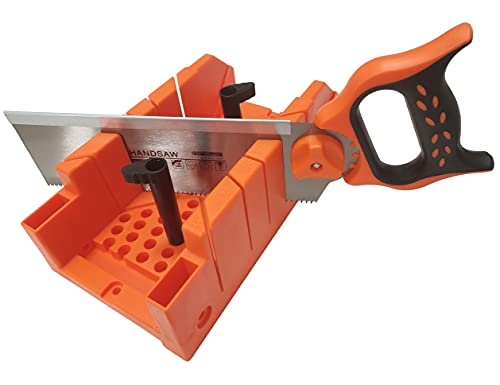
- Best for: Small frames, hobby builds, and craft projects where preset angles save measuring time.
- 12-inch miter box with saw included
- Reinforced steel back saw
- Preset 90, 45, 22.5, and 0 degree cuts
- Cutting capacity 4-1/2 in x 3 in
All 3 Picks at a Glance
| Product | Specs | Action |
|---|---|---|
| Stanley 1-20-600 Saw Storage Miter Box with Saw |
| Check price on Amazon |
| CRAFTSMAN Mitre Saw, 12-Inch Saw and Clamping Box (CMHT20600) |
| Check price on Amazon |
| ACEgoes 12-Inch Miter Box with Saw Included |
| Check price on Amazon |
Key takeaways
- Compare the best compound mitre box saws for trim, moulding, and picture frames, with clamping boxes, back saws, and preset angle slots.
A mitre box saw is the quiet tool that turns rough trim cuts into joints that actually close. You set the moulding in the box, slide the saw through the angled slot, and the cut comes out square or at forty-five degrees without a power saw, a bench, or a cloud of dust. The decision that matters is which box and saw combination suits the trim you cut most, because a box that is too small for your skirting or too loose for your picture frame moulding will waste more timber than it saves.
This guide is for home improvers fitting skirting and architrave, hobbyists building picture frames, and renters who need clean mitre cuts without owning a powered saw. Each set below was picked from its Amazon product page, with the box size, saw length, and angle slots taken from the listing title and details, so you can match the tool to the trim in your hands.
Quick Picks
As an Amazon Associate we earn from qualifying purchases.
| Product | Best for | Key spec from title |
|---|---|---|
| Stanley 1-20-600 Saw Storage Miter Box with Saw | Everyday trim jobs around the house | Miter box with saw included, black |
| CRAFTSMAN Mitre Saw, 12-Inch Saw and Clamping Box (CMHT20600) | Accurate mitres on skirting and architrave | 12-inch saw with clamping box and 2 cam pins |
| GreatNeck BSB14 Mitre Box and Saw Set | Fine cuts on delicate moulding | 12-inch mitre box with 14-inch back saw |
| ACEgoes 12-Inch Miter Box with Saw Included | Small frames and hobby projects | 12-inch miter box with preset 90, 45, 22.5 and 0 degree cuts |
How to Choose
Match the box to the trim you cut
The first measurement that matters is the width and height of the moulding you cut most often. A twelve-inch box handles standard skirting, architrave, and picture frame moulding, while a box with a three-inch depth of cut copes with taller profiles and chunkier trim. If the moulding stands proud of the box walls, the saw cannot stay in the slot and the cut wanders. Before you buy, measure the widest piece of trim in your project pile and check it against the cutting capacity in the listing, leaving a little room for the saw to run free above the workpiece.
Look for a clamping system that holds the work still
A mitre cut is only as accurate as the workpiece is still, so the way the box grips the timber matters more than the brand on the handle. Cam pins that twist and lock the moulding against the wall of the box stop the piece creeping sideways mid-stroke, and a honeycomb or ribbed base keeps thin trim from flexing under the saw. Boxes without any clamping leave you holding the moulding with one hand and sawing with the other, which works for a single cut but gets tiring and inaccurate across a whole room of skirting.
Check the angles the box actually offers
Most mitre boxes cut ninety and forty-five degrees, which covers the corners of a room and the joints of a frame. Boxes that add twenty-two-and-a-half degrees open up octagonal frames, bay window trim, and other angles that a basic box cannot reach. Compound cuts, where the saw tilts as well as angles, are rare in a hand box, so read the listing carefully and do not assume a box cuts bevels just because the title mentions compound work. The angle slots should be clean and tight enough to guide the saw without letting it wobble.
Judge the saw by its teeth and its back
The saw that comes with the box does most of the work, so its teeth and spine deserve a close look. A fine-toothed back saw with around twelve teeth per inch leaves a smoother edge on painted trim and delicate moulding, while a coarser saw cuts faster through softwood but leaves a rougher face to sand. A reinforced steel back keeps the blade straight through the cut, which is what stops the saw drifting off the line on a long piece of skirting. If the saw feels flimsy in the hand, the box will not save the cut.
The 4 Best Options
Stanley 1-20-600 Saw Storage Miter Box with Saw
- Best for: Homeowners tackling their first skirting or architrave job who want a complete set in one box.
- Miter box with saw included
- Saw storage built into the box
- Black finish
- Model 20-600
Homeowners tackling their first skirting or architrave job who want a complete set in one box.
Listings for this model vary between size variants, so confirm the included saw length and the angle slots in the listing before ordering.
The Stanley 1-20-600 is the straightforward choice for anyone who wants a mitre box and saw that is ready to use straight out of the packaging. The box stores the saw inside itself, so the set stays together in a cupboard or a toolbox between jobs instead of scattering across a shelf. It handles the usual run of household trim work, from cutting skirting to length to mitring architrave around a door, and the black plastic body is light enough to carry from room to room. For a first mitre box, or a replacement for a worn-out set, it covers the basics without fuss.
Watch out for: Listings for this model vary between size variants, so confirm the included saw length and the angle slots in the listing before ordering.
CRAFTSMAN Mitre Saw, 12-Inch Saw and Clamping Box (CMHT20600)
- Best for: Fitting skirting and architrave across a room, where holding long lengths steady makes the difference.
- 12-inch saw
- Clamping miter box
- Includes 1 miter box, 1 saw, and 2 cam pins
- Cam-shaped pins twist and lock work in place
Fitting skirting and architrave across a room, where holding long lengths steady makes the difference.
The clamping pins suit standard trim profiles best, so very thin or unusually shaped moulding may still need a steadying hand.
The CRAFTSMAN CMHT20600 stands out in this group because of its clamping system, which is the feature that separates a neat mitre from a gappy one. Cam-shaped pins twist and lock the workpiece against the box, and the honeycomb base holds the moulding steady while the twelve-inch saw runs through the slot. That grip matters most on long lengths of skirting, where a piece that shifts halfway through the cut ruins the joint. The set is a solid pick for anyone fitting trim across a whole room rather than cutting a single frame.
Watch out for: The clamping pins suit standard trim profiles best, so very thin or unusually shaped moulding may still need a steadying hand.
GreatNeck BSB14 Mitre Box and Saw Set
The GreatNeck BSB14 is the precision pick of this guide, built around a twelve-inch mitre box and a fourteen-inch back saw that is made for fine work. The steel-backed saw stays straight through the cut, and twelve teeth per inch leave a smooth edge on trim and moulding that needs little sanding afterwards. A three-inch depth of cut handles taller profiles, and the high-impact plastic handle is shaped for long sessions without tiring the hand. It is the set to reach for when the finish matters as much as the fit.
Specs
- 12-inch mitre box
- 14-inch back saw
- 3-inch depth of cut
- 12 teeth per inch
- Steel back saw with high-impact plastic handle
Best for: Picture framing and delicate moulding, where a smooth cut edge and a straight blade matter most.
Watch out for: Fine teeth cut more slowly than coarse ones, so allow extra strokes on long cuts through softwood.
ACEgoes 12-Inch Miter Box with Saw Included
- Best for: Small frames, hobby builds, and craft projects where preset angles save measuring time.
- 12-inch miter box with saw included
- Reinforced steel back saw
- Preset 90, 45, 22.5, and 0 degree cuts
- Cutting capacity 4-1/2 in x 3 in
Small frames, hobby builds, and craft projects where preset angles save measuring time.
The box is sized for smaller trim, so measure wide skirting against the cutting capacity before relying on it for a whole room.
The ACEgoes set is the compact option for small projects, with a twelve-inch box and a reinforced steel back saw that covers the angles a hobbyist reaches for most. Preset slots at ninety, forty-five, twenty-two-and-a-half, and zero degrees handle square cuts, frame corners, and octagonal shapes without measuring each angle by hand. The cutting capacity of four-and-a-half inches by three inches is generous for its size, so it copes with picture frame moulding, small skirting, and craft timber in a single tool.
Watch out for: The box is sized for smaller trim, so measure wide skirting against the cutting capacity before relying on it for a whole room.
Which One Fits Your Situation
Fitting skirting and architrave in one room
The CRAFTSMAN CMHT20600 is the right pick for a room full of skirting, because the cam pins and honeycomb base hold long lengths still while you saw. The Stanley 1-20-600 is the fallback if you want a simpler set that stores its own saw, though you will need to hold the work steadier by hand on longer cuts.
Building picture frames at home
The GreatNeck BSB14 suits picture framing best, since its fine-toothed back saw leaves smooth edges on delicate moulding and the steel back keeps each cut straight and smooth. The ACEgoes set is the cheaper alternative for occasional frames at home, with preset angles that make corner joints quick and simple to set up.
Occasional repairs and small DIY jobs
The Stanley 1-20-600 covers occasional repairs without taking up much space, because the saw stores inside the box and the set is ready whenever a piece of trim needs replacing. Keep the ACEgoes set in mind if your repairs lean towards small frames and craft pieces rather than full lengths of skirting.
A first mitre box for a new workshop
A new workshop benefits most from the ACEgoes set, since its preset angles cover the widest range of small projects and the steel back saw is forgiving for a beginner. Move up to the GreatNeck BSB14 once your projects demand finer cuts, and add the CRAFTSMAN set when you start fitting trim across whole rooms.
Common Mistakes
- Buying a box without measuring the widest trim you cut, then finding the moulding stands proud of the box walls.
- Sawing with a loose grip on the workpiece instead of using the clamping pins, which lets the cut drift off the line.
- Assuming every mitre box cuts bevels, when most hand boxes only guide the saw at mitre angles.
- Forcing a fine-toothed saw through softwood, which clogs the teeth and leaves a rough, wandering cut.
- Skipping a test cut on an offcut, then discovering the joint gaps only after the good length of trim is cut.
Frequently Asked Questions
What is a mitre box saw used for?
A mitre box saw is a hand saw guided by a slotted box, used to cut trim, moulding, skirting, and picture frames at precise angles. The box holds the saw at ninety or forty-five degrees, so the cut comes out square without a power saw. It suits home improvers and hobbyists who need clean joints on small jobs, and it works anywhere without a socket or a dust extractor.
Can a mitre box saw cut compound angles?
Most hand mitre boxes cut mitre angles, such as forty-five degrees for a frame corner, and a few add twenty-two-and-a-half degrees for octagonal work. True compound cuts, where the saw tilts as well as angles, are uncommon in a hand box, so check the listing for the exact slots and angles before you buy. For repeated compound cuts on crown moulding, a powered compound saw is usually the better tool.
What size mitre box do I need for skirting?
A twelve-inch box suits most household skirting, provided the cutting capacity covers the height of the profile. Measure the tallest piece of skirting and compare it with the depth of cut in the listing, leaving room for the saw to run above the workpiece. If the skirting stands proud of the box walls, the saw cannot stay in the slot and the cut will wander, so choose a deeper box.
How do I keep mitre joints from gapping?
Clamp the workpiece firmly, or hold it tight against the wall, so it cannot shift mid-stroke. Use a fine-toothed back saw and let the teeth do the work instead of forcing the blade, which bends the cut off the line. Make a test cut on an offcut first, check the joint dry before fixing it, and trim a fraction at a time rather than cutting the full length at once.