Our Short List of 3

- Best for: Gardeners who want one dependable two-gallon sprayer for beds, paths and lawn edges.
- Tank capacity: 2 gallons
- Tank material: translucent poly
- Seals: nitrile
- Hose length: 34 inches

- Best for: Gardeners who move between misting, fan spraying and spot treatments in one session.
- Tank capacity: 2 gallons
- Tank material: HDPE
- Maximum pressure: 60 PSI
- Seals: Viton in key locations
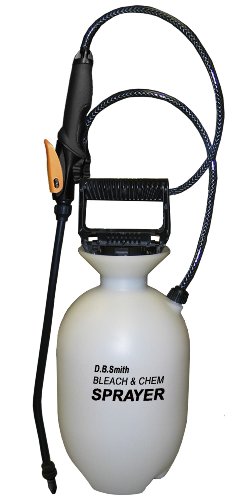
- Best for: Homeowners whose main spraying work involves bleach or stronger cleaning chemicals.
- Tank capacity: 1 gallon
- Model: 190285
- Positioned for bleach and chemical spraying
All 4 Picks at a Glance
| Product | Specs | Action |
|---|---|---|
| Chapin 20002 2-Gallon Pump Sprayer |
| Check price on Amazon |
| Solo 430-2G 2-Gallon Pump Sprayer |
| Check price on Amazon |
| Smith 190285 1-Gallon Bleach and Chemical Sprayer |
| Check price on Amazon |
 Chapin 20000 1-Gallon Pump Sprayer |
| Check price on Amazon |
Key takeaways
- Compare the best 1 to 2 gallon sprayers for garden and yard work, with tank materials, seal types, wand and nozzle details to check before you buy.
The real decision with a small pump sprayer is not the brand name on the tank. It is whether one or two gallons matches the ground you actually cover, and whether the seals inside the sprayer can live with the liquid you plan to put in it. A one-gallon tank you refill once beats a two-gallon tank you haul around half empty, but only if the wand, hose and nozzle suit the job. Buy for the work you do most weekends, not for the biggest tank on the shelf.
The four sprayers below split into two camps. Gardeners spraying beds, paths and small lawns get the two-gallon Chapin 20002 and Solo 430-2G. Anyone whose main job is bleach or stronger chemicals gets the one-gallon Smith 190285, positioned for exactly that work, while the one-gallon Chapin 20000 suits lighter tasks. Each pick was chosen from its own product page: tank material, seal type, hose and wand length, and nozzle setup.
Quick Picks
As an Amazon Associate we earn from qualifying purchases.
| Product | Best for | Key spec from title |
|---|---|---|
| Chapin 20002 2-Gallon Pump Sprayer | Everyday garden and lawn spraying | 2-gallon translucent poly tank |
| Solo 430-2G 2-Gallon Pump Sprayer | Buyers who switch spray patterns often | Four-nozzle assortment included |
| Smith 190285 1-Gallon Bleach and Chemical Sprayer | Bleach and chemical jobs around the home | 1-gallon bleach and chemical sprayer |
| Chapin 20000 1-Gallon Pump Sprayer | Light, single-session spraying tasks | 1-gallon tank with SureSpray anti-clog filter |
How to Choose
Match Tank Size to the Area You Spray
Capacity decides how often you stop to refill and how much weight you carry. Two gallons covers a typical suburban garden, a driveway’s worth of weeds, or a fence line without a second mix. One gallon is easier to lift, quicker to rinse, and less wasteful when you only need a small batch of weed killer or cleaning solution. Think about your longest single session: if you routinely run a tank dry before finishing, step up to two gallons. If most jobs take half a tank, the smaller size will feel better in your hand and store more easily.
Check the Seals Against Your Chemicals
Seals are the part of a sprayer that chemicals attack first. Nitrile seals, like those in the Chapin 20002, handle common garden products well. Viton seals, fitted in key locations on the Solo 430-2G, tolerate a wider range of chemicals. Bleach is harsher than most garden mixes, which is why a dedicated bleach and chemical sprayer such as the Smith 190285 exists as its own product class. Whatever you spray, read the sprayer’s stated chemical compatibility before mixing, and never assume a sprayer that handled weed killer last season will shrug off bleach this season.
Look at Wand, Hose and Nozzle Reach
Reach decides whether you spray the far side of a bed without stepping into it. Hose length and wand length work together: the Chapin 20002 pairs a 34-inch hose with its wand, while the Solo 430-2G carries a 28-inch wand. Nozzle choice matters just as much. An adjustable cone nozzle covers most garden work, but a set that also includes fan, hollow cone and jet stream tips lets you move from misting seedlings to a targeted stream on a single weed without swapping equipment. A lock-on valve reduces hand fatigue on long passes.
Consider Cleaning and Clog Protection
A sprayer that clogs mid-job usually clogs because residue dried inside it. An in-tank filter, like the SureSpray anti-clog filter on the Chapin 20000, catches debris before it reaches the nozzle. A funnel top, found on the Solo 430-2G and the Chapin 20000, makes filling and emptying cleaner and helps you rinse the tank fully. Translucent tanks let you see the liquid level and spot leftover mix at a glance. Plan to rinse after every use, run clean water through the wand, and store the sprayer empty.
The 4 Best Options
Chapin 20002 2-Gallon Pump Sprayer
- Best for: Gardeners who want one dependable two-gallon sprayer for beds, paths and lawn edges.
- Tank capacity: 2 gallons
- Tank material: translucent poly
- Seals: nitrile
- Hose length: 34 inches
Gardeners who want one dependable two-gallon sprayer for beds, paths and lawn edges.
Nitrile seals have limits with harsh chemicals, so check compatibility before spraying anything stronger than standard garden mixes.
This is the straightforward default for general garden and yard work. The two-gallon translucent poly tank lets you watch the level as you spray, and the nitrile seals suit the herbicides, insecticides and fertilisers most home gardeners mix. A 34-inch hose gives enough slack to work around shrubs and raised beds without dragging the tank behind you at every step. It is made in the USA and carries a one-year limited warranty, which makes it a sensible first pump sprayer for a typical home garden.
Solo 430-2G 2-Gallon Pump Sprayer
- Best for: Gardeners who move between misting, fan spraying and spot treatments in one session.
- Tank capacity: 2 gallons
- Tank material: HDPE
- Maximum pressure: 60 PSI
- Seals: Viton in key locations
Gardeners who move between misting, fan spraying and spot treatments in one session.
The Viton seals are fitted in key locations rather than throughout, so still confirm compatibility before using aggressive chemicals.
The Solo suits buyers who change spray patterns often. Its two-gallon HDPE tank is rated to a maximum pressure of 60 PSI, and Viton seals in key locations give it more chemical tolerance than basic models. The standout is the four-nozzle assortment: adjustable, fan, hollow cone and jet stream tips cover everything from a fine mist to a directed stream. A 28-inch wand, funnel top and lock-on/off valve round out a package aimed at longer, varied spraying sessions around a larger garden.
Smith 190285 1-Gallon Bleach and Chemical Sprayer
- Best for: Homeowners whose main spraying work involves bleach or stronger cleaning chemicals.
- Tank capacity: 1 gallon
- Model: 190285
- Positioned for bleach and chemical spraying
Homeowners whose main spraying work involves bleach or stronger cleaning chemicals.
It is bleach-positioned by design, so if you want one sprayer mainly for garden herbicides, one of the two-gallon garden models above is the better fit.
This one-gallon sprayer exists for a specific job: it is positioned as a bleach and chemical sprayer, not a general garden tool. That positioning matters, because bleach degrades seals and parts that cope fine with ordinary garden mixes. If your spraying is mostly mould treatment, patio cleaning or disinfecting work, a sprayer built and labelled for bleach is the safer purchase than pressing a lawn sprayer into service. The one-gallon size also suits cleaning jobs, where you mix a small batch, use it, and rinse the tank the same day.
Chapin 20000 1-Gallon Pump Sprayer
- Best for: Small, occasional spraying jobs where a two-gallon tank would be more than you need.
- Tank capacity: 1 gallon
- Tank material: translucent polypropylene
- Funnel top
- SureSpray anti-clog in-tank filter
Small, occasional spraying jobs where a two-gallon tank would be more than you need.
The listing’s model-number field prints ‘20004’ under the 20000 Series name, so check the model printed on the box when yours arrives rather than assuming a wrong item shipped.
The smaller Chapin is built for quick, single-session jobs: a batch of weed killer for the driveway cracks, a treatment for one rose bed, a rinse-down afterwards. Its one-gallon translucent polypropylene tank has a funnel top for clean filling, and the SureSpray anti-clog in-tank filter helps keep debris away from the adjustable cone nozzle. A 12-inch poly wand and 28-inch reinforced hose keep the whole unit compact and easy to store on a garage shelf between uses.
Which One Fits Your Situation
You Spray the Whole Garden Most Weekends
Choose the Chapin 20002. Two gallons means one mix usually finishes the beds, the lawn edges and the path without a refill trip, and the translucent tank shows you exactly how much is left. Its nitrile seals match the standard garden chemicals most home gardeners actually use week after week.
You Switch Between Misting and Spot Treating
Choose the Solo 430-2G. The four-nozzle assortment is the difference: fan for coverage, hollow cone for plants, jet stream for a single stubborn weed, all from one tank without swapping equipment. The lock-on valve and higher maximum pressure also help on longer passes around a bigger plot.
Your Spraying Is Mostly Bleach and Cleaning Work
Choose the Smith 190285. It is the only pick here positioned for bleach and chemicals, and that positioning is the whole point. Using a dedicated one-gallon sprayer for cleaning jobs keeps bleach away from the seals of your garden sprayer and keeps garden chemicals out of your cleaning routine.
You Only Spray Small Areas Now and Then
Choose the Chapin 20000. One gallon is lighter to carry, faster to rinse, and less mix goes to waste when the job is small. The anti-clog in-tank filter is a genuine help for occasional users, because sprayers that sit in storage between jobs are the ones most likely to clog.
Common Mistakes
- Buying a two-gallon tank for a tiny yard, then carrying the extra weight and wasting leftover mix on every job.
- Spraying bleach through a general garden sprayer whose seals were never rated for it, then blaming the sprayer when they fail.
- Storing a sprayer with mix left inside, which dries into residue that clogs the nozzle and filter next time.
- Ignoring the model number printed on the box, which matters with the Chapin 20000 because its listing shows ‘20004’ in the model field.
- Using one nozzle for every task instead of matching the tip to the job, which wastes chemical and gives uneven coverage.
Frequently Asked Questions
Is a 1-gallon or 2-gallon sprayer better for a home garden?
It depends on your longest session. A two-gallon sprayer suits gardens where you regularly spray beds, paths and edges in one go. A one-gallon model is lighter, quicker to clean and better for small batches. Many homeowners find one gallon enough; frequent sprayers usually prefer two.
Can I spray bleach in a regular garden sprayer?
It is safer not to. Bleach attacks the seals in many general-purpose sprayers, shortening their life and risking leaks. A sprayer positioned for bleach and chemical use, like the Smith 190285 in this list, is built for that job. Whatever you use, rinse it thoroughly straight after spraying.
How do I stop my pump sprayer from clogging?
Rinse the tank after every use, run clean water through the hose, wand and nozzle, and store the sprayer empty. An in-tank filter, such as the SureSpray filter on the Chapin 20000, also helps by catching debris before it reaches the nozzle. Most clogs come from dried residue, not defects.
What should I check when my sprayer arrives?
Confirm the model number on the box matches what you ordered, check the hose and wand are the lengths described, and make sure every nozzle in the stated assortment is in the box. With the Chapin 20000, the listing’s model field prints ‘20004’, so compare carefully before assuming a mix-up.