Our Short List of 3
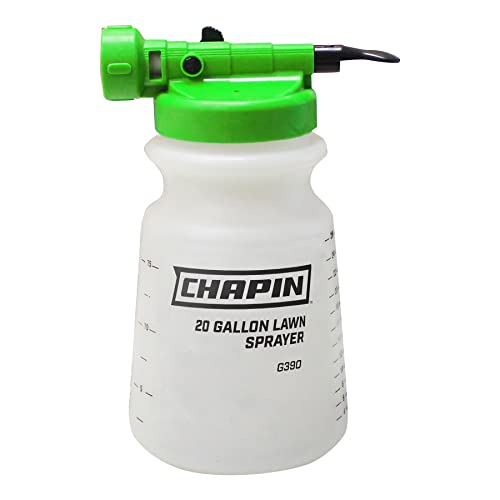
- Best for: Spraying a whole lawn quickly with a hose-end sprayer.
- Model: G390
- Tank volume: 32 fluid ounces
- Finished spray: 20 gallons
- Type: hose-end sprayer for water-soluble materials

- Best for: Spot spraying weeds, pests, and fertiliser around beds and paths.
- Model: 20004
- Tank volume: 1 gallon
- Tank: translucent polyethylene tank with funnel-top opening
- Nozzle: adjustable cone nozzle

- Best for: Spraying both liquid and dry water-soluble concentrates with one hose-end tool.
- Model: G6015
- Tank volume: 32 ounces, 0.25 gallons
- Type: wet/dry hose-end sprayer
- Nozzle: adjustable 4-position nozzle
All 3 Picks at a Glance
| Product | Specs | Action |
|---|---|---|
| Chapin G390 Hose End Sprayer |
| Check price on Amazon |
| Chapin 20004 Pump Sprayer, 1-Gallon |
| Check price on Amazon |
| Chapin G6015 Wet/Dry Hose-End Sprayer |
| Check price on Amazon |
Key takeaways
- Compare yard sprayers for lawns and gardens, from hose-end models to pump sprayers. Find the right tank size, nozzle, and mixing control for your yard.
Spraying a lawn by hand with a watering can takes forever, and a garden hose alone throws water everywhere except where the treatment needs to go. A yard sprayer solves that gap by mixing a concentrate with water and delivering it evenly across grass, beds, and shrubs. The right sprayer turns a morning of fertilising or weed control into a steady walk across the yard.
Homeowners treating a lawn, gardeners feeding beds, and anyone tackling weeds along a fence line will need different tools. A hose-end sprayer covers a large lawn quickly, while a pump sprayer gives precise control around plants and paths. Every pick below comes from the names and specifications shown on its Amazon product page, so the tank size, spray volume, and nozzle type are taken from the listing itself.
Quick Picks
As an Amazon Associate we earn from qualifying purchases
| Product | Best for | Key spec from title |
|---|---|---|
| Chapin G390 Hose End Sprayer | Spraying a whole lawn with a hose | 32-ounce tank, sprays 20 gallons |
| Chapin G364D Professional Hose-End Sprayer | Precise mixing for large lawn treatments | 32-ounce tank, 16 mixing ratios, sprays 320 gallons |
| Chapin 20004 Pump Sprayer, 1-Gallon | Spot spraying weeds and pests by hand | 1-gallon tank, 34-inch hose, adjustable cone nozzle |
| Chapin G6015 Wet/Dry Hose-End Sprayer | Spraying liquid and water-soluble concentrates | 32-ounce tank, adjustable 4-position nozzle |
How to Choose
Hose-end or pump sprayer
Hose-end sprayers attach to a garden hose and use water pressure to mix and spray, which makes them fast for large lawns. Pump sprayers carry their own tank and need hand pumping to build pressure, which makes them slower but far more precise around beds, paths, and individual plants. Choose a hose-end model when the job covers a whole lawn in one pass, and choose a pump sprayer when the job needs careful aim and a small amount of liquid. Many yards benefit from having one of each.
Tank size and finished spray volume
Tank size tells you how much concentrate the sprayer holds, while finished spray volume tells you how much mixed liquid it will deliver. A 32-ounce hose-end tank that sprays 20 gallons covers a large lawn, while the same size tank on a professional model can spray 320 gallons because the mixing dial uses far less concentrate per gallon. A one-gallon pump sprayer suits spot work and small beds, since carrying more than a gallon gets heavy quickly. Match the tank and the finished volume to the size of the area you treat most often.
Mixing control and nozzle choice
Mixing control decides how much concentrate goes into each gallon of water, and a dial with several ratios lets you match the mix to the product label. The Chapin G364D in this guide offers 16 mixing ratios on a metering dial, which suits owners who switch between fertiliser, weed control, and pest treatments. Nozzle choice matters too: a fan spray covers a wide strip of lawn, an adjustable cone nozzle moves from a fine mist to a jet, and a four-position nozzle gives a quick change between patterns. Check the nozzle on the listing before buying.
Hose length, tank material, and comfort
A pump sprayer with a long hose and a wand reaches under shrubs and along fence lines without forcing you to bend or carry the tank into tight spots. The Chapin 20004 in this guide has a 34-inch hose and a poly extension wand, which keeps the spray away from your hands and shoes. Translucent tanks help because you can see the fluid level without opening the cap, and a funnel-top opening makes filling and cleaning easier. A comfort-grip handle and a lightweight tank matter on a hot day when the job takes an hour.
The 4 Best Options
Chapin G390 Hose End Sprayer
- Best for: Spraying a whole lawn quickly with a hose-end sprayer.
- Model: G390
- Tank volume: 32 fluid ounces
- Finished spray: 20 gallons
- Type: hose-end sprayer for water-soluble materials
Spraying a whole lawn quickly with a hose-end sprayer.
Check that the concentrate you use is water soluble, since this sprayer is made for water-soluble materials.
Covering a lawn with fertiliser or weed control is quick work with this hose-end sprayer, which attaches to a standard garden hose and mixes as it sprays. Its 32-ounce tank holds the concentrate, and the finished spray reaches 20 gallons, so one fill covers a large area without stopping to refill. Finger control lets you start and stop the flow without walking back to the tap, and backflow prevention keeps the concentrate out of the water supply. It suits homeowners who want a simple tool for regular lawn treatments.
Watch out for: Check that the concentrate you use is water soluble, since this sprayer is made for water-soluble materials.
Chapin G364D Professional Hose-End Sprayer
Large lawns need precise mixing, and this professional Chapin model gives you a metering dial with 16 mixing ratios to match the product label. Its 32-ounce concentrate tank can spray up to 320 gallons of mixed liquid, so a single fill goes a long way on a big property. A built-in anti-siphon device protects the water supply, and the comfort-grip handle limits fatigue during a long session. It fits onto a standard garden hose without an adapter, which keeps setup simple.
Specs
- Model: G364D
- Tank volume: 32 fluid ounces
- Finished spray: up to 320 gallons
- Mixing ratios: 16 mixing ratios on the metering dial
- Safety: built-in anti-siphon
- Handle: comfort-grip handle
- Fit: fits onto a standard garden hose
Best for: Precise, large-area lawn treatments where the mixing ratio matters.
Watch out for: Set the metering dial to the ratio on the product label before spraying, and check the dial setting again after refilling.
Chapin 20004 Pump Sprayer, 1-Gallon
- Best for: Spot spraying weeds, pests, and fertiliser around beds and paths.
- Model: 20004
- Tank volume: 1 gallon
- Tank: translucent polyethylene tank with funnel-top opening
- Nozzle: adjustable cone nozzle
Spot spraying weeds, pests, and fertiliser around beds and paths.
Release the pressure before opening the tank, and rinse the sprayer after use so residue does not clog the nozzle.
Spot spraying calls for a tool you can aim, and this one-gallon pump sprayer gives you that control. Its translucent tank holds a gallon of mixed liquid, and the funnel-top opening makes filling easy without spilling. An adjustable cone nozzle moves from a fine mist to a jet, while the 34-inch hose and poly extension wand reach under shrubs and along edges. The ergonomic pump handle makes it easy to build pressure, and the lightweight poly tank is rust free.
Watch out for: Release the pressure before opening the tank, and rinse the sprayer after use so residue does not clog the nozzle.
Chapin G6015 Wet/Dry Hose-End Sprayer
- Best for: Spraying both liquid and dry water-soluble concentrates with one hose-end tool.
- Model: G6015
- Tank volume: 32 ounces, 0.25 gallons
- Type: wet/dry hose-end sprayer
- Nozzle: adjustable 4-position nozzle
Spraying both liquid and dry water-soluble concentrates with one hose-end tool.
Check that a dry concentrate dissolves fully in water before spraying, since undissolved granules can clog the nozzle.
Some concentrates come as liquids and others as dry, water-soluble powders, and this Chapin hose-end sprayer handles both. Its 32-ounce translucent tank holds either type, and the adjustable four-position nozzle lets you change the spray pattern without changing the nozzle. The sprayer fits a standard garden hose and uses water pressure to mix and deliver the treatment, so there is no pumping. It suits owners who switch between liquid fertiliser and dry weed control products through the season.
Watch out for: Check that a dry concentrate dissolves fully in water before spraying, since undissolved granules can clog the nozzle.
Which One Fits Your Situation
Treating a whole lawn in one pass
Choose the Chapin G390 Hose End Sprayer. Its 32-ounce tank sprays 20 gallons of finished liquid, which covers a large lawn without refilling. Finger control lets you pause the flow at the tap end, and backflow prevention protects the water supply.
Feeding a large lawn with precise mixing
Choose the Chapin G364D Professional Hose-End Sprayer. The 16-ratio metering dial lets you match the mix to the product label, and the 320-gallon finished volume means fewer refills. Its comfort-grip handle helps during a long session.
Spot spraying weeds along a fence
Choose the Chapin 20004 Pump Sprayer, 1-Gallon. The adjustable cone nozzle and 34-inch hose with a wand let you aim at individual weeds without wetting nearby plants. Carry only as much mixed liquid as the job needs.
Switching between liquid and dry concentrates
Choose the Chapin G6015 Wet/Dry Hose-End Sprayer. It handles both liquid and water-soluble dry concentrates in the same 32-ounce tank, and the four-position nozzle changes the pattern quickly. Rinse the tank between different products.
Common Mistakes
- Using a hose-end sprayer for spot work, which wastes concentrate on areas that do not need treatment.
- Ignoring the mixing ratio on the product label, so the spray is too weak or too strong.
- Leaving mixed liquid in a pump sprayer for days, which can clog the nozzle and damage seals.
- Spraying on a windy day, which carries the treatment onto plants and paths that were not meant to be treated.
- Forgetting to rinse the sprayer after use, so residue hardens inside the nozzle and hose.
Frequently Asked Questions
What is the difference between a hose-end and a pump sprayer?
A hose-end sprayer attaches to a garden hose and uses water pressure to mix and spray, which makes it fast for large lawns. A pump sprayer carries its own tank and needs hand pumping to build pressure, which makes it slower but more precise. Choose a hose-end model for whole-lawn work and a pump sprayer for spot work around beds and paths.
How much lawn can a 32-ounce hose-end sprayer cover?
It depends on the mixing ratio. The Chapin G390 in this guide sprays 20 gallons of finished liquid from a 32-ounce tank, while the Chapin G364D can spray up to 320 gallons because its metering dial uses less concentrate per gallon. Check the finished spray volume on the listing and the ratio on the product label before buying.
Can I use a yard sprayer for fertiliser and weed control?
Yes, most yard sprayers in this guide are made for fertiliser, weed control, and pest treatments, as long as the product is compatible with the sprayer type. Hose-end models suit water-soluble concentrates, while pump sprayers suit mixed liquids for spot work. Read the product label for the sprayer type and the mixing ratio it needs.
How do I clean a yard sprayer after use?
Rinse the tank with clean water, spray clean water through the nozzle and hose until it runs clear, and let the sprayer dry with the cap off. Release the pressure from a pump sprayer before opening it. Cleaning after each use stops residue from clogging the nozzle and keeps seals in good condition for the next job.